|
|
 |
|
Rosenthal - The Malibu Estate Vineyard History
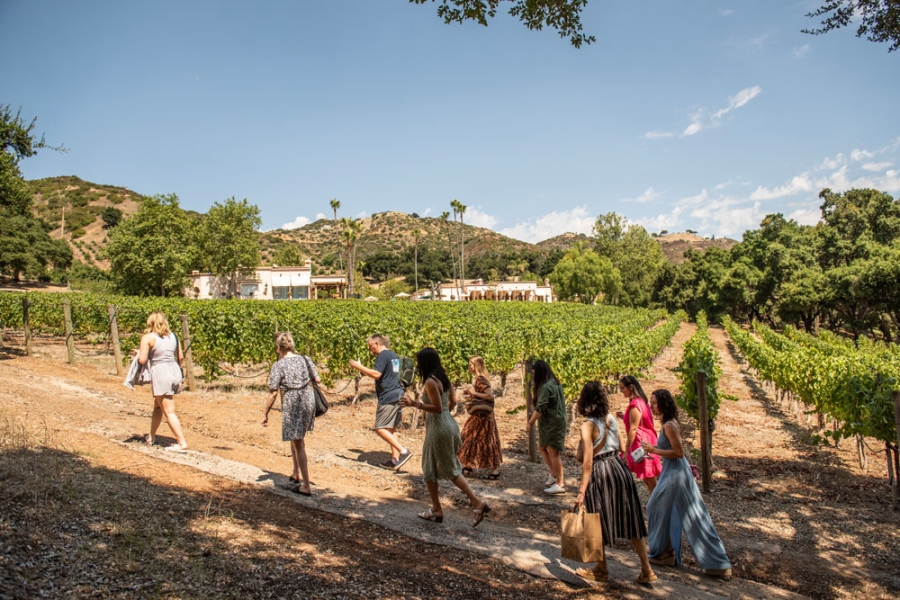
The Malibu Hills Vineyards are situated at elevations
between 1,450 to 1,510 feet. To the west of the vineyards is a
1,630-foot ridge that creates a unique microclimate in the
hills above Malibu, California. The ridge holds back the
cooling marine layer ocean breezes in June and July so that
the days are warm and the evening temperatures drop
substantially when a chimney effect is created and the cool
air floods through the vineyards from closely located Vera
Canyon. Distinctively unique Cabernet Sauvignon, Merlot, and
Chardon-nay are crafted from the fruit grown on the property.
The ranch and vineyards are owned by Raleigh Enterprises, of
which Mr. George I. Rosenthal is Chairman and Chief Executive
Officer.

A new viticultural area, named Malibu-Newton Canyon, has
been established consisting of approximately 850 acres within
Newton Canyon, and encompassing all of the Rosenthal-The
Malibu Estate vine-yards. Grape varietals grown comprise
approximately 14 acres of Cabernet Sauvignon (planted first in
1987, with additional acreage planted in 1988 and 1989), and
small amounts of Merlot, Cabernet Franc, and Petit Verdot.
Three acres of Chardon-nay were planted in 1991 with the first
vintage in 1994. Case production is extremely limited from
this boutique winery.
Corky Roche, President of Roche Vineyard Consulting,
manages the vineyards, using drip irrigation on trellised and
thinned vines for low yields and maximum quality.

The grapes are handpicked at harvest, loaded in small bins,
and crushed on the property. The juice is chilled, then
immediately shipped to vintner Christian Roguenant at the
Malibu Hills Winery, located at Orcutt Road Cellars in San
Luis Obispo. The grapes are harvested, crushed, and processed
in the same day. Aging in the finest French oak barrels
available brings out the best qualities in the wines.
Plans are presently on the drawing board for Rosenthal to
produce and bottle the wine at the estate, creating both a
winery and storage cave on the property. The cave will be
tunneled into the side of an existing rock formation at the
rear of one vineyard.
Printable Page
|
|