Fine wine from Malibu? Southern
California's Malibu, home to movie stars and Bay Watch?
George Rosenthal is a businessman in the Los Angeles area,
involved in real estate and the film industry as well as a
number of other projects. Some years ago he started
brainstorming about what it took to grow great Bordeaux
varieties.
After more than a little thought, Rosenthal took a helicopter
flight over the Malibu area, a region dotted here and there
with million-dollar homes on multi-acre parcels of brush land
that sit just a scant few miles from the Pacific Ocean.
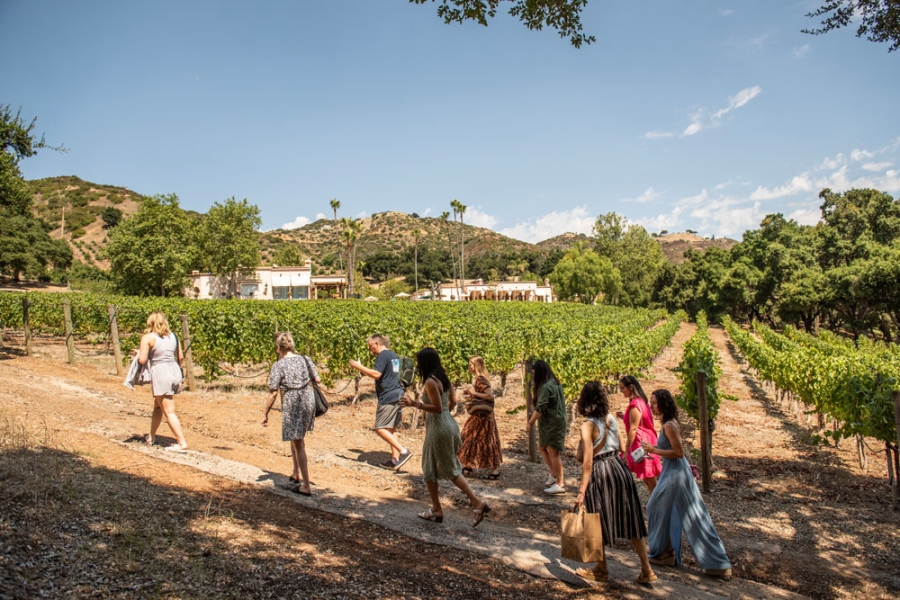
What Rosenthal saw looked to him like a perfect little
protected valley. It was raw and filled with rills and
boulders, but it was protected from the coastline by not one,
but two low-lying ridges. He had to see the soil up close.
And when he did, Rosenthal was surprised at the fact that it
had a more porous nature than many of the clay-like
outcroppings nearby. It was perfect, he thought, not only for
a getaway ranch, but also as a place to experiment with
grapevines.
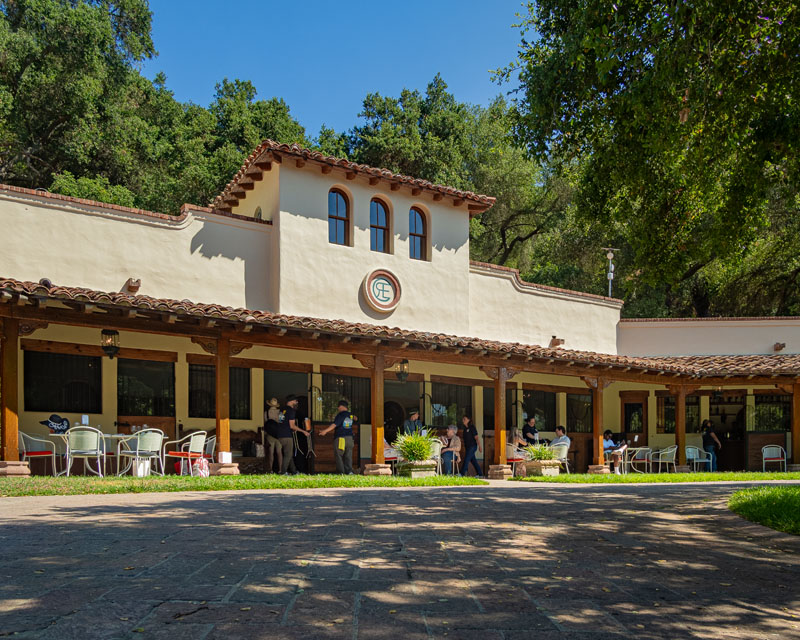
The result was The Rosenthal Estate, a Cabernet Sauvignon
specialist in the heart of a prestigious residential area. The
first wines were, in fact, startlingly fine, but the quest to
make great wine on a continual, daily basis, didn't come
easily.
Or inexpensively. First came the plating. It was arduous work
partially because there is no ready agricultural labor force
in Malibu. Then the amount of information available wasn't
readily accessible; the Internet was yet to be a major force
back in the early 1980ęs.
Then arose the problems such as equipment: most of it is sold
in northern California. Grape stakes, wire, grapevine cuttings
and bench grafts, drip irrigation systems, and the like were
readily available elsewhere. L .A. residents haven't seen this
sort of gear.
Water also is expensive. So is the labor to do the fieldwork
to prep the soil, remove boulders, erect fences, and build
paths for the tractors.
The work was difficult and very expensive, and Rosenthal soon
knew he needed help. But he had al-ready spent a small fortune
on this project, so he hired the best, Central Coast
viticulturalist Jim Efird. Then he realized he had no place to
make the wine. And getting a permit in Los Angeles County for
a winery was not going to be easy. So George made arrangements
with Sanford Winery to handle his first few crushes.
Needless to say, this story is far more complicated than a
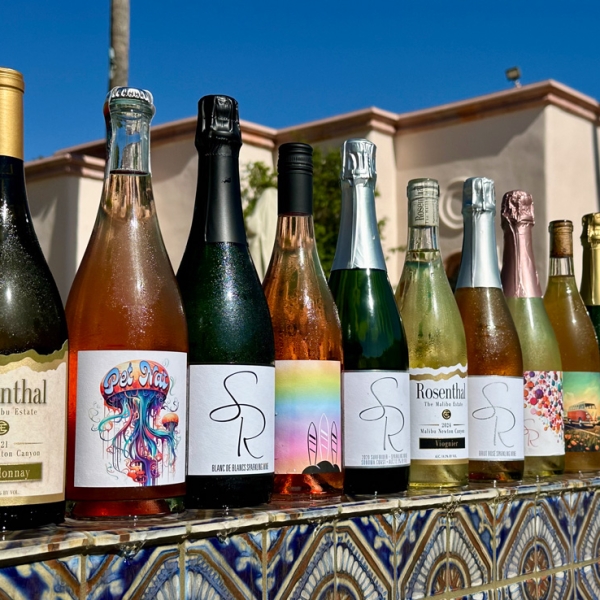
short article could ever convey, but today The Rosenthal
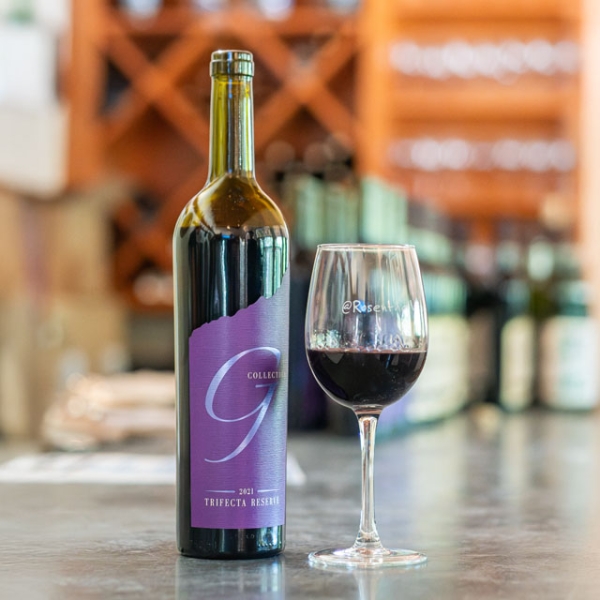
Estate produces a Cabernet Sauvignon that sells out at $35 a
bottle, makes an outstanding Merlot (also $35), and a small
amount of a splendid Chardonnay.
True, it was George Rosenthal's passion and commitment that
pushed this project to completion. But without literally
millions of dollars to see it through, the project would have
failed.
Money was a stumbling block, of course, in that Rosenthal
wouldn't have continued to pump money into it had the
resulting wines not showed great character from the start. And
he admits he was lucky he had the wherewithal to fund it
properly.
But it was commitment, passion, and a willingness to use all
the tools modern wine making requires to make the wines that
show this terroir in a wine that now is a staple on the
California wine scene.
In many ways, the opening of the Malibu –wine growing
district” is not yet a major story. Other than a few other
tiny projects (Saddle Rock, Jussila and the Malibu Vineyards
project of restaurateur Michael McCarty [Michaels]), the
Rosenthal Estate is the only major one in the region. But he
single-handedly proved that great red wine could be grown in
the area, and other major projects are sure to follow.
Commentary by Dan Berger
Printable Page
^ Top of Page
|